Pilots
The PIISA pilots explored and co-created insurance motivated solutions to improve weather-related risk management and enhance climate change adaptation. Five Pilots developed solutions to acute protection gaps in different risk contexts: urban floods and heat, building damage due to clay soil shrinkage and swelling, agricultural drought, wind damage to forest, and wildfires. The solutions piloted were co-created with local and/or pertinent users and stakeholders for a particular real-life context and place. Piloting included exploring barriers and enablers for a wider uptake of novel solutions in Europe. The “Replicability roadmap” provides a structured and forward-looking synthesis on how the results generated by PIISA pilots can be replicated, transferred or adapted beyond their original implementation contexts.
Deliverables
D4.7 Replicability Roadmap

The following themes will be explored in the pilots:
Pilot 1 - Green Roof Insurances,
Pilot 2 - Addressing soil stability risks for home owner
insurance holders,
Pilot 3 - Insurance Services for Agriculture,
Pilot 4 - Forest Insurances against selected biotic and
abiotic risks
Pilot 5 - Wildfire insurance enhancing adaptive actions.
Description of PIISA Pilots
PILOT 1: Green roof insurances
Pilot lead: IVM
In this pilot, we studied how insurance can stimulate the adoption of urban nature-based solutions, specifically green roofs. Surveys, economic experiments and cost-benefit analyses have been conducted for this purpose. The implementation of green roofs is increasing, but still scarce, even though they provide various climate change adaptation and mitigation benefits, such as water management or insulation against urban floods and excess heat. Results indicate that (i) green roofs would provide significant economic and environmental benefits if upscaled; (ii) evidence on the risk-reduction benefits of green roofs needs to be built-up for the insurance sector to adopt these solutions; (iii) upscaling could be attained by lifting existing barriers, as well as combining existing incentive schemes with other behavioural interventions (e.g. information provision) and/or insurance incentives (e.g. premium discounts, etc.)
PILOT 2: Addressing gaps in insurance cover for clay shrink-swell
Pilot lead: Sustainable Finance ObservatoryThis pilot focused on the problem on property damage caused by clay shrink swell events and raising homeowner awareness of the potential financial risks associated with inadequate insurance cover. This phenomenon poses a substantial threat for homeowners as the property damage can range from minor cosmetic damage to serious structural issues, often requiring costly repairs. Many areas in Europe have high clay content in the soil and are potentially at risk and the level of risk is projected to increase due to climate change. We developed the Clay Shrink Swell Building Damage Assessor, or CSSBDA which is a web-based tool designed to communicate financial and related risks to homeowners in France in a clear and accessible way. At the same time research was carried out to assess CSS risk and insurance frameworks across other EU countries to inform a Risk Alert Briefing addressed to key stakeholders.
PILOT 3: Insurance services for agriculture
Pilot lead: BSC CNS
This pilot addressed the insurance protection gap in the agriculture sector. To meet this goal, the pilot co-developed a demand-driven, index-based insurance (IbI, also known as parametric insurance) solution that meets farmers' needs while ensuring viability for insurance providers. A market analysis was conducted in the Boreal region (Finland) to assess demand for index-based climate insurances. Market analyses were also carried out in the Mediterranean region (Spain and Italy). In Southern Spain, in collaboration with the farmer association ASAJA Jaén, the pilot identified local climate risks, farmer needs, and insurance gaps to co-develop an IbI solution, while also developing a tool to support its design, validation, and application of IbI. In addition, the pilot explored the complementary role of climate services in supporting on-farm adaptation, including the operationalization of seasonal forecasts for drought-related indicators in the case study location, and assessed the potential for replicating these solutions across the EU.
PILOT 4: Forest insurances against wind damages
Pilot lead: AXA ClimateInsurance is a risk transfer solution which can compensate the financial losses of forest stakeholders following climate disasters, while encouraging landowners or forest managers to invest in risk reduction and adaptation measures. This pilot on windthrow risks focused on integrating forest vulnerability into insurance modelling. It integrated detailed forest characteristics (such as species composition and stand structure) into a forest vulnerability map, and developed a Wind Power Exposure Index (WPEI) taking wind speed, wind direction, and storm duration into account. Together, these two components enable the estimation of expected storm damages at a forest-stand level, and support insurance product development and pricing. Initially developed and tested in Germany, the modelling framework was subsequently validated across several European countries, including France, Ireland, Scotland, and Denmark. Indicative insurance pricing simulations based on the model outputs resulted in a premium of approximately 5€ per hectare per year for an insured value of 1,000€ per hectare, broadly aligned with observed willingness-to-pay levels for forest insurance in Europe. The pilot demonstrates that wind risk can be quantified in a scalable and replicable way, while highlighting the importance of regional calibration and ground-truth validation prior to product deployment.
PILOT 5: Wildfire Insurance Enhancing Adaptive Actions
Pilot lead: AXA Climate
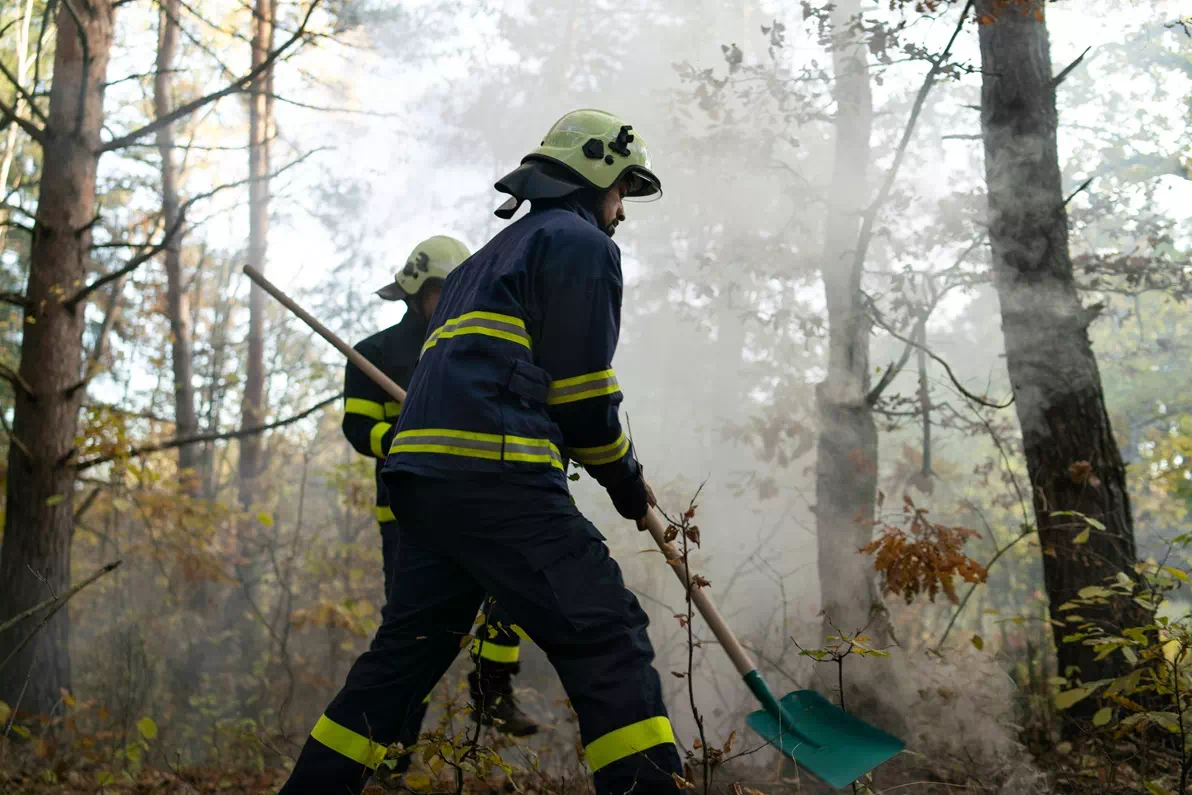
Due to increased drought events, wildfires are increasing both in Europe and worldwide. Climate conditions, ignition triggers, and vegetation covers are the key drivers of wildfire propagation and intensity. To reduce vulnerability to fires, it is crucial to address how insurance mechanisms can promote adaptation measures at different levels. Thus, the purpose of this pilot was to develop innovative wildfire forest insurance to incentivise adaptation measures at household and forest association levels, focusing on the integration of adaption measures into wildfire risk assessment and insurance design. Conducted in Central Portugal, the pilot combined wildfire hazard modelling with adaptation scenarios derived from national and regional fire management plans developed by the Agency for Integrated Rural Fire Management (AGIF). Two complementary fire spread models were calibrated using historical fire data and satellite observations, and used to simulate baseline and adaptation scenarios involving primary and secondary fuel management networks. Results show that well-designed and properly maintained fuel management measures can reduce annual burn probabilities by approximately 30-40%, whereas poorly maintained or degraded measures yield risk reductions of only around 5%. When translated into insurance pricing, fully implemented adaptation scenarios resulting in substantial premium reductions – up to 70-95% for forest coverage and 80-84% for building exposure, depending on the model and insurance structure utilized. Primary fuel breaks were identified as the main driver of premium reduction in forests, while secondary fuel breaks played a dominant role in reducing risk for buildings and settlements. Beyond premium effects, adaptation measures also enabled more favourable insurance conditions, such as lower deductibles and higher coverage limits, supporting continued insurability under worsening fire-prone climatic conditions.
What do the first innovation rounds tell us?
The first innovation rounds of the PIISA pilots are designed to cover different European biogeographical regions: Atlantic (Netherlands, pilot 1), Continental (France, pilot 2 and Germany, pilot 4), Boreal (Finland, pilot 3) and Mediterranean (Portugal, pilot 5).
- According to Risk Data Hub’s vulnerability index (European Commission Disaster Risk Management Knowledge Centre 2022*), the vulnerability indices of the first pilot countries are:
- Pilot 1 Amsterdam, Netherlands: 4 - 5
- Pilot 2 Lyon, France: 4 - 5
- Pilot 3 Finland: 2,5 - 4
- Pilot 4 Germany: 4 - 5
- Pilot 5 Central Portugal: 5 - 6
Pilot 1 starts in the Netherlands. The cities in Central Europe are densely built and populated, so there is a need for solutions that address heatwaves and droughts in such areas. Heatwaves are getting more frequent, longer, and hotter in Europe leading to droughts as well as the precipitation patterns are changing, with downpours and other precipitation extremes increasing in magnitude. (European Environment Agency 2024**).
In France, the issue of clay soil shrinkage and swelling is connected to more severe droughts and more volatile heavy rainfall. During longer droughts clay soil will dry and contract whereas during heavy rainfall significant saturation can cause swelling which can lead to property damage. The city of Lyon, where the pilot 2 starts, is vulnerable to this risk and the risk is expected to grow as climate change increases.
The vulnerability index in Finland is relatively low compared to other regions in Europe. According to the European Climate Risk Assessment (2024) the main climate risks in European agriculture are reductions in crop and livestock production from changing growing conditions and extreme weather events. However, the farmers In Finland are not very well prepared for all future risks, for example droughts, as there are no irrigation systems widely in place.
Forestry is an important industry in Germany. According to the European Climate Risk Assessment (2024), it is projected that climate change will increasingly affect the functioning and productivity of forests in all climate scenarios. The first innovation round of pilot 3 considers climate risks such as forest fire, drought, and pest outbreaks.
The pilot 5 starts in Portugal where the vulnerability index is the highest. The effects of climate change will affect Southern Europe heavily. Above average temperatures and drought conditions have already led to elevated risk of wildfires in the area. According to the European Climate Risk Assessment (2024), Southern Europe will experience extensive wildfires each year in the near future (2021 - 2040) and in the longer term the fires can be more frequent, intense and severe as the climate crisis progresses.
*) European Commission Disaster Risk Management Knowledge Centre. (2022). Risk Data Hub Vulnerability Dashboard. https://drmkc.jrc.ec.europa.eu/risk-data-hub#/dashboardvulnerability
**) European Environment Agency. (2024). European Climate Risk Assessment. EEA Report 01/2024.